
Understanding Your Blood Test Results Clearly
Dive into the details of common blood tests with easy explanations and tips to help you make sense of your numbers.
5/8/20246 min read
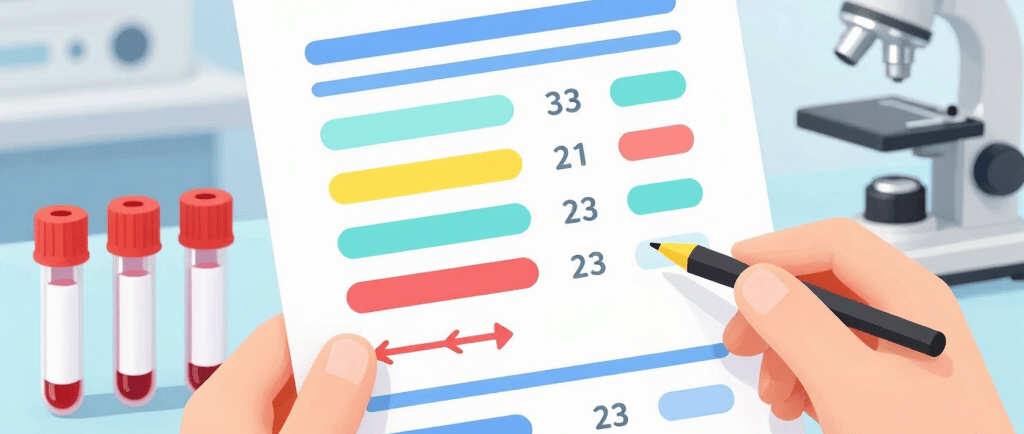
Blood test results can feel confusing.
You open the result, and suddenly you see numbers, arrows, red flags, medical words, and letters that look like someone fell asleep on the keyboard.
FBC.
HbA1c.
eGFR.
ALT.
TSH.
Lp(a).
And you’re sitting there like, “Okay, but am I dying or am I alright?”
The truth is, blood test results are not there to scare you. They are there to give clues about what is happening inside your body.
A blood test does not always give the full story by itself. Your symptoms, age, family history, medication, lifestyle, and previous results all matter. But when you understand the common markers, you stop looking at your results like a mystery document.
In this guide, you’ll learn 7 important blood test areas people should understand in simple English.
Full Blood Count
A full blood count, often called FBC, is one of the most common blood tests.
It looks at the main cells in your blood, including red blood cells, white blood cells, haemoglobin, and platelets. The NHS explains that a full blood count measures blood cells and can help check for blood conditions such as iron deficiency anaemia. (nhs.uk)
Think of red blood cells as oxygen delivery drivers. Their job is to carry oxygen around your body.
Haemoglobin is the oxygen-carrying part of your red blood cells. If your haemoglobin is low, you may feel tired, weak, dizzy, breathless, or pale.
White blood cells are part of your immune defence. If they are too high or too low, your doctor may look for infection, inflammation, or other causes.
Platelets help your blood clot. If platelets are too low, you may bruise or bleed more easily. If they are too high, your doctor may want to understand why.
One FBC result does not explain everything. But it gives your doctor a strong first look at your blood health.
HbA1c
HbA1c is a blood test that checks your average blood sugar over the past 2 to 3 months.
This is different from a one-day blood sugar check.
You can eat carefully for one morning and get a better fasting sugar result. But HbA1c looks at the bigger picture. The CDC says an A1c below 5.7% is normal, 5.7% to 6.4% is prediabetes, and 6.5% or higher points to diabetes when confirmed properly. (CDC)
So HbA1c is like your blood sugar history.
It helps show whether your body has been handling sugar well over time.
This matters because many people with prediabetes do not feel obvious symptoms. You might feel normal while your blood sugar is slowly rising.
Things that can affect blood sugar include food choices, portion sizes, weight, sleep, stress, activity level, family history, and some health conditions.
If you have high blood pressure, belly fat, family history of type 2 diabetes, frequent thirst, frequent urination, tiredness after meals, or blurry vision, HbA1c is worth discussing with your doctor.
Cholesterol, ApoB, and Lp(a)
A standard cholesterol test usually checks total cholesterol, LDL, HDL, and triglycerides.
LDL is often called “bad cholesterol” because high levels can increase the risk of plaque building up in arteries.
HDL is often called “good cholesterol” because it helps carry cholesterol away from the blood.
Triglycerides are another type of fat in the blood. High triglycerides can link with insulin resistance, diabetes risk, fatty liver, and heart risk.
But cholesterol is not always the full story.
ApoB is a blood test that helps count harmful cholesterol-carrying particles. Heart.org explains that ApoB can give a clearer view of heart disease risk because two people can have the same LDL level but different numbers of cholesterol-carrying particles. (www.heart.org)
Lp(a), pronounced L P little a, is another important marker. It is mostly genetic, which means your family background plays a big role.
The scary part is this. A standard cholesterol test does not include Lp(a). Heart.org explains that the only way to know your Lp(a) level is through a specific blood test, and current guidance recommends adults check it at least once in their lifetime. (www.heart.org)
This is important if heart attacks, strokes, or heart disease happened early in your family.
You can look healthy, eat well, and still have high Lp(a), because it is not mainly controlled by lifestyle.
That does not mean you should panic. It means you should know your risk and speak to your healthcare professional.
Kidney Function
Your kidneys filter waste from your blood, balance fluid, help control blood pressure, and support many body functions.
The common kidney blood markers include creatinine and eGFR.
Creatinine is a waste product from muscles. Your kidneys remove it from your blood. If creatinine rises, it can suggest the kidneys are not filtering as well as expected.
eGFR estimates how well your kidneys are filtering blood.
But kidney testing should not only be about blood. Urine ACR is also important.
ACR means albumin-creatinine ratio. It checks if tiny amounts of protein are leaking into your urine.
NICE says chronic kidney disease is classified using both eGFR and urine ACR. (NICE CKS)
This matters because kidney problems can be quiet in the early stages.
You might not feel pain. You might still go to work, eat normally, and feel okay.
People with diabetes, high blood pressure, heart disease, family history of kidney disease, foamy urine, swollen legs, or long-term use of some painkillers should take kidney checks seriously.
Liver Function
Your liver works like a busy chemical factory.
It processes nutrients, handles alcohol, helps digestion, stores energy, and clears waste products from the body.
Liver blood tests often include ALT, AST, ALP, bilirubin, albumin, and sometimes GGT.
ALT and AST can rise when liver cells are irritated or damaged.
ALP and bilirubin can help show bile flow or liver processing issues.
Albumin can help show how well the liver is making certain proteins.
GGT can rise with alcohol-related liver stress, fatty liver, bile duct issues, and other liver problems.
The NHS says blood tests can check how organs such as the liver and kidneys are working. (nhs.uk)
Many people think liver problems only happen to people who drink alcohol. That is not true.
Fatty liver can also link with belly fat, insulin resistance, high triglycerides, type 2 diabetes risk, and high intake of refined carbohydrates or sugary drinks.
Liver problems may not show strong symptoms early. That is why blood tests can help show clues before symptoms become clear.
If you drink often, have belly fat, high triglycerides, diabetes risk, unexplained tiredness, yellow eyes, dark urine, or pain in the upper right side of the belly, discuss liver testing with a doctor.
Thyroid
Your thyroid is a small gland in your neck, but it affects energy, weight, temperature, mood, heart rate, and digestion.
A common thyroid blood test is TSH, which stands for thyroid stimulating hormone.
TSH helps show whether your thyroid is working too slowly or too fast. The NHS lists TSH as a blood test used to check thyroid conditions such as underactive thyroid. (nhs.uk)
Sometimes doctors also check free T4, and in some cases free T3, depending on symptoms and the first result.
If your thyroid is underactive, you may feel tired, cold, low in mood, constipated, dry-skinned, or gain weight more easily.
If your thyroid is overactive, you may feel shaky, anxious, sweaty, lose weight unexpectedly, or notice a fast heartbeat.
Thyroid symptoms can be confusing because they overlap with stress, poor sleep, low iron, anxiety, and other health issues.
That is why testing helps.
Nutrient Deficiencies
Some blood tests check whether your body has enough key nutrients.
The common ones include ferritin, vitamin B12, folate, and vitamin D.
Ferritin shows your iron stores.
This is important because your haemoglobin may still look okay while your iron stores are already low.
Low ferritin can link with tiredness, weakness, dizziness, breathlessness, restless legs, poor exercise tolerance, and hair shedding.
Vitamin B12 helps nerves and blood cells.
Low B12 can cause tiredness, tingling, numbness, memory problems, low mood, mouth ulcers, and balance issues.
Folate also helps with blood cell production and cell growth.
Vitamin D supports bones, muscles, and immune function.
In countries with less sunlight, vitamin D deficiency is more common. People with darker skin may also need more sunlight exposure to make enough vitamin D.
The key point is this. Don’t guess blindly.
Too much iron can be harmful. Too much vitamin D can also cause problems. Testing gives better direction than guessing from symptoms alone.
How to Read Blood Test Results Without Panicking
When you see a result outside the normal range, don’t panic straight away.
A slightly high or low result does not always mean something serious.
Your doctor will look at the full picture.
They may ask:
Do you have symptoms?
Have your results changed over time?
Are you taking medication?
Were you fasting?
Were you ill recently?
Do you have a family history?
Do you need a repeat test?
Trends matter.
One result is a snapshot. Several results over time tell a better story.
If your HbA1c is slowly rising, that matters.
If your eGFR is slowly dropping, that matters.
If your liver enzymes keep going up, that matters.
If your ferritin keeps falling, that matters.
So if you can, keep copies of your old blood test results. They help you and your doctor see the direction your health is moving.
Final Thoughts
Blood test results are not there to frighten you.
They are there to give you clues.
Full blood count helps show what is happening with your blood cells.
HbA1c helps show your average blood sugar.
Cholesterol, ApoB, and Lp(a) help show heart risk.
Kidney tests help show filtration and protein leakage.
Liver tests help show liver stress.
Thyroid tests help explain energy, weight, mood, and body speed.
Nutrient tests can show hidden deficiencies linked with tiredness and weakness.
You should not diagnose yourself from one number.
Use your results as a starting point for a proper conversation with a qualified healthcare professional.
Your body may warn you before serious symptoms appear. Blood tests are one way to listen early.
Disclaimer: This article is for educational purposes only and is not medical advice. Speak to a qualified healthcare professional before making health decisions or changing your treatment.